


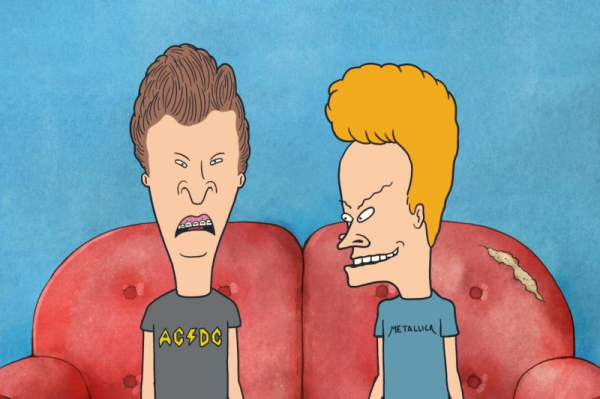
1 of 3 | The “Beavis and Butt-Head” revival returns for Season 3 Wednesday on Comedy Central. Season 1 Photo courtey of Paramount+
Mike Judge’s Beavis and Butt-Head is funny, largely because the title characters remain the same in every situation. Season 3 of the show’s revival, premiering Wednesday at 10:30 p.m. EDT on Comedy Central, finds ways to evolve the characters while remaining faithful to the lovable idiots.
Several episodes, including the Season 3 premiere, animate painful slapstick like the revival’s best episode, “Downward Dumbass,” in which Beavis gets stuck in a pair of yoga pants. Beavis and Butt-Head try such bad ideas that can only result in them getting hurt, but the inevitable occurs in unexpectedly funny ways.
The animation frequently frames a basic setup, holding off on showing the punchline until the wide shot. The pair’s clumsiness is hilariously destructive.
Since the show is animated, the injury and destruction Beavis and Butt-Head experience plays out like Wile E. Coyote sketches. Many episodes end with the two facing consequences, but everything is reset by the next episode.
These characters have grown without losing their innocent (okay, sometimes malevolent) stupidity and biting observations about stuff that sucks. Their commentary on today’s popular videos is more sophisticated, reflecting an awareness of things that have occurred in the last 30 years, albeit understanding little of it.
In the season premiere, Beavis and Butt-Head improvise a dialogue between a divorced mom and her son, inspired by two YouTubers making a fight video. Likewise, Butt-Head’s cracks about Beavis’ mom, who is never seen on screen, address the trauma her activities cause Beavis as well as slut-shaming her.
The mom jokes are consistent with the original series but never had this much depth before. Jokes about what people subject themselves to for minimal likes are equally perceptive.
Social media “likes” weren’t an issue for the videos Beavis and Butt-head criticized on MTV, so they are aware of how our prolific screen use impacts culture for the worse.
They still watch artists like Olivia Rodrigo and Post Malone, plus some more obscure acts who still produce music videos. The best segments are when the video sends Beavis and Butt-Head off on a totally unrelated tangent.
The revelation of the revival has been the middle-aged versions of Beavis and Butt-Head. The teenage versions arrived in the present through a wormhole in the film Beavis and Butt-Head Do the Universe.
Introducing science-fiction into Beavis and Butt-Head also opened an alternate universe in which the pair grew up normally. In those episodes, they have lived as those characters with no emotional growth but exhibiting the wear and tear of decades of unhealthy living.
It’s interesting that old Butt-Head smokes. No entertainment in 2025 shows characters smoking, lest they be seen as endorsing it. But it makes sense that Butt-Head would ignore warnings and buy a pack the day he turned 18.
In middle-age, they complain about adulting and dad jokes, while misunderstanding how white privilege works. All three are relevant to modern grown-ups, but the pair poke loving fun at society’s sometimes ridiculous trends.
They try new experiences, where the humor always comes in how they mess it up, usually not in the most expected, obvious way. Beavis and Butt-Head have a take on AI that shows they have no actual understanding of what it is, and yet it is still an astute depiction of the technology’s usefulness or lack thereof.
Even their typical attitude shows new dimensions. Beavis always mumbled things like “I’ll be damned” when he was zoning out as someone was talking.
His new asides are hilarious, and just as disconnected from the person he’s talking to. He has a new inner voice that is consistent with his position in life.
Some familiar faces who hadn’t shown up yet in the revival finally make their reappearance in Season 3. The season finale answers a question UPI posed to Judge in a Season 2 interview.
Having Beavis and Butt-Head to guide us through these tumultuous times in media and the world is comfort viewing. That they haven’t lost their edge and remain as unintentionally perceptive as ever makes this a superior revival.
Fred Topel, who attended film school at Ithaca College, is a UPI entertainment writer based in Los Angeles. He has been a professional film critic since 1999, a Rotten Tomatoes critic since 2001, and a member of the Television Critics Association since 2012 and the Critics Choice Association since 2023. Read more of his work in Entertainment.
